Category Archives: Liturgy

Holy Thursday by Deacon Marty

Israel 624

The Upper Room where Jesus had the Last Supper. 


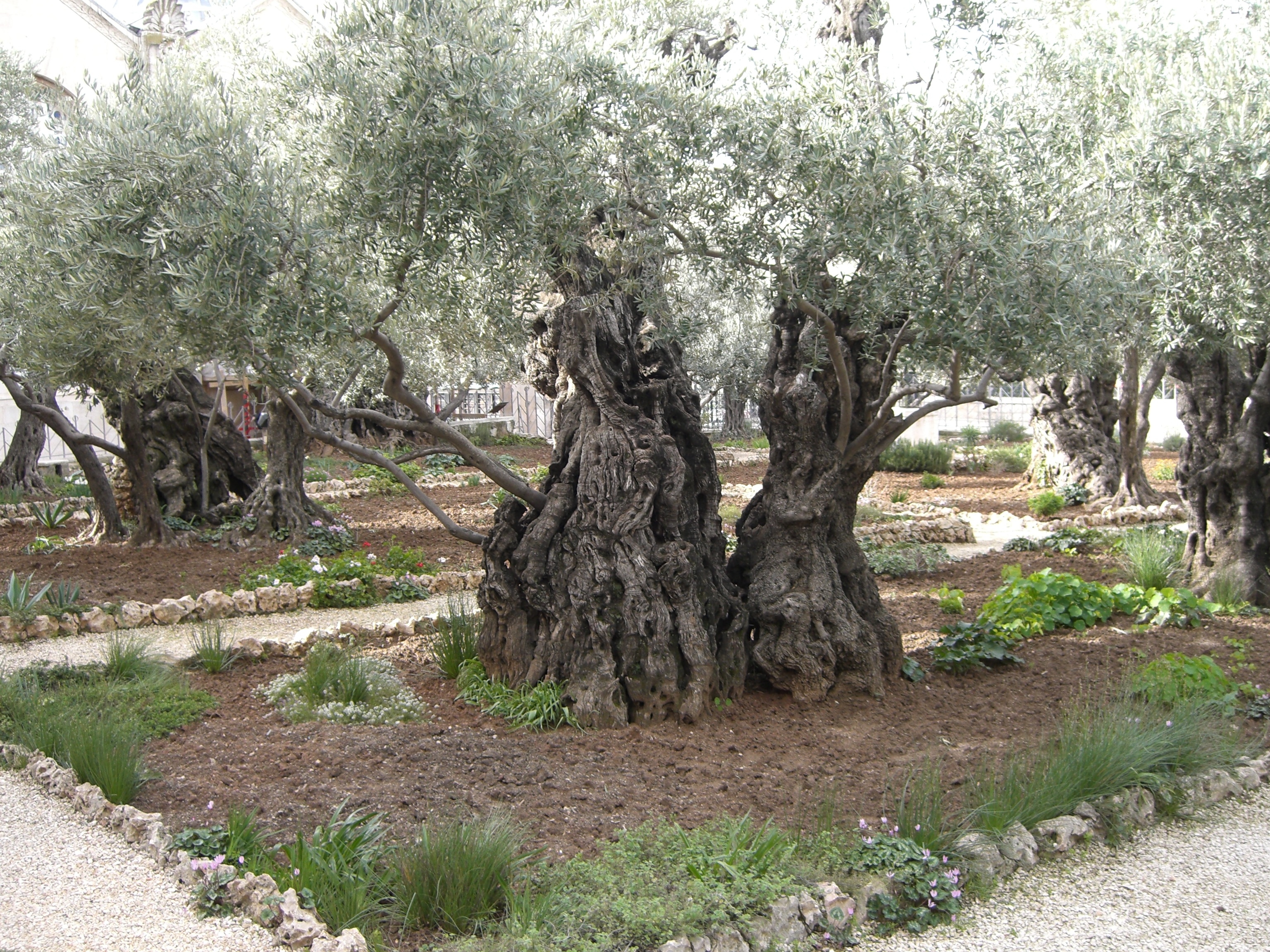
Israel 875

The Garden of Gethsemane where the disciples slept while Jesus had his Agony.  Some of the Olive trees here today are over 2000 years old (proved by Scientific testing), thus present when Jesus was here.

Israel 887

Inside the Church of All Nations; this is the stone which Jesus laid upon during His agony.  The altar is built right next to the stone.  We sat around the stone during mass.

This is such a special day for the Church.  Today we celebrate how Jesus gives us the Eucharist and the Priesthood, as well as the call to service.  We do not have our normal mass schedule in Church today.  Rather we celebrate two masses; The Chrism mass and the Mass of the Lord’s Last Supper.  The Chrism mass is held in the morning at the local Cathedral where the Bishop blesses all of the oils that will be used for this year by each of the Parishes in the diocese.  He blesses the Oil of the Sick, the Oil of the Catechumen and the Oil of Chrism.  Each parish in the diocese sends representatives and they take back to their own parishes the blessed oils.  This shows the link between the Bishop and his parishes.  The priests and deacons of the diocese gather together for this mass along with the faithful.  The priests renew their commitment to priestly service.  Remember that today is the day that Jesus gave us the ministerial priesthood.  If you see your priest today, tell him “thank you” for answering God’s call.  In the evening the local parish celebrates the Mass of the Lord’s Supper.  This reminds us that Jesus gave us the gift of the Eucharist on Holy Thursday.  The priests and deacons and faithful gather together in their parish.  It is at this mass that we have the Washing of Feet.  The pastor, or his representative, usually washes twelve people’s feet.  This reminds us of how Jesus washed the feet of His disciples at the Last supper.  It is a call both to humility and to service.  We then celebrate the Eucharist and consecrate enough hosts to be used until the Easter Vigil.  Mass is not celebrated on Good Friday or during the day on Holy Saturday.  There is a procession, after we receive the Blessed Sacrament, where the consecrated hosts are brought to a side chapel for reposition.  The main tabernacle in the church is left empty and the doors open.  It is desirable for the people to gather around the consecrated hosts in the side chapel for adoration and prayer.  This reminds us of how Jesus asked his disciples to remain with him in the Garden of Gethsemane while He had His agony.

During Holy Thursday Jesus had the disciples prepare for His Last Supper.  When they gathered in the Upper Room for this, Jesus taught them the breaking of the bread, the Eucharist.  He washed their feet and He told Judas to go and do what he had planned.  After the Last Supper, Jesus and the disciples went to the Garden of Gethsemane where Jesus had his Agony and the disciples slept through their watch.  Judas comes there with the authorities and picks out Jesus with a kiss.  Jesus is arrested and the disciples all become fearful.

Have you thought about how special our Bishops and Priests are?  Do you see the link between the local Church and the Bishop?  Do your see the link between the Bishop and the Pope and the world wide Church?  How special is the Eucharist to you?  Do you receive often?  Do you spend much time in adoration and prayer?  The Church gives us so much to help us grow in our faith.  Do we make use of what the Church gives us?

The Day I Discovered the Greatest and Deepest Truth by Fr. Richard Heilman

StPetersBasilica1-770x439_c

It was on February 2, 1998, that I had the experience of a lifetime, in more ways than one. It was a Papal Mass with Pope John Paul II, on the Feast of the Presentation. I was studying in Rome for three months, at the time. The priests studying received a beautiful engraved invitation, and we were thrilled to be going. We were told that we should go two hours ahead of time, if we hoped for a good seat. I joked that I don’t go that early for anything, even for the pope.

We arrived about 30 minutes before Mass, and they were right … there was no hope for a seat, and we were destined to stand in the back. With five minutes to go, an usher looked over at me and a priest friend. Now realize, there were 100s of priests there. He signaled for us to come over to him. He proceeded to take us up the aisle. He kept going and going and going, until we got to the two front rows reserved for Bishops and Cardinals … the only rows with velvet kneelers. He motioned for us to sit there. To this day, I have no clue why he singled us out amongst the 100s of priests in attendance.

There we were in St. Peter’s Basilica in Rome (see photo above), about to pray with the Vicar of Christ. As Mass began, glorious “sacred” music filled the Basilica … and my soul. Of course, being a Papal Mass, there was great attention given to precision, which struck me as “beautiful order.” But, it was more than that. While I had always loved the Mass, I felt, maybe for the first time, that we were truly “glorifying” God. On that day, February 2, 1998, I was truly changed.

I began to ask myself, “What have I been doing?” I had spent the first ten years of my priesthood buying into the common notion that, if we create all kinds of trendy nuances to the Mass, while we kept the Mass as whimsical and entertaining as possible, people would hear about how “cool” and “fun” and “with the times” we were, and come running. We were treating the Mass as a commodity that we needed to somehow market to the world. Worse than anything, I realized we were all but throwing out any sense of divinity; any sense of the supernatural. Where, in all of this, was any sense of awe and wonder in God’s presence? Where was the sense of God’s majesty?

Saint Francis of Assisi said, “Man should tremble, the world should quake, all Heaven should be deeply moved when the Son of God appears on the altar in the hands of the priest.” Where was that in my “night club act” or “Broadway musical” Masses??

I’ve come to understand that we have (actually, I believe this is the work of the devil), by and large, removed the very gateway into the Divine Life. I happen to agree with Pope St. Gregory the Great who, wanting to capture the spiritual dynamism of the gifts of the Holy Spirit, posited the following order:

“Through the fear of the Lord, we rise to piety, from piety then to knowledge, from knowledge we derive strength, from strength counsel, with counsel we move toward understanding, and with intelligence toward wisdom and thus, by the sevenfold grace of the Spirit, there opens to us at the end of the ascent the entrance to the life of Heaven” (“Homiliae in Hiezechihelem Prophetam,” II 7,7).

As you can see, the entry point is “Fear of the Lord.”

What is Fear of the Lord? According to Fr. John Hardon, Fear of the Lord …

“… inspires a person with profound respect for the majesty of God. Its corresponding effects are protection from sin through dread of offending the Lord, and a strong confidence in the power of His help. The fear of the Lord is not servile but filial. It is based on the selfless love of God, whom it shrinks from offending. Whereas in servile fear the evil dreaded is punishment; in filial fear it is the fear of doing anything contrary to the will of God. The gift of fear comprises three principal elements: a vivid sense of God’s greatness, a lively sorrow for the least faults committed, and a vigilant care in avoiding occasions of sin. It is expressed in prayer of the Psalmist, ‘My whole being trembles before you, your ruling fills me with fear’” (Ps 119:120).

St. Francis de Sales said, “We must fear God out of love, not love him out of fear.” In other words, Fear of the Lord is a fear of ever offending the One we love so much; the One in which we have totally dedicated and devoted our lives; the One Who fills us with awe and wonder in His presence. Fear of the Lord is the entry point; this is the trigger that ignites all of the other gifts of the Holy Spirit.

Without this “trigger,” we are prone to reduce our faith/religion to merely another organization that has a sense of social responsibility. Jesus is then reduced to an historic figure to emulate. Mass is just a social gathering that many may say (without saying), “it had better have good entertainment if you are going to make me endure this for an hour.” Again, all of the supernatural is stripped out and the belief in miracles and the power of supernatural grace is mocked as the ignorance of our ancestors.

So, we can see why Satan is winning. He is in the supernatural realm using supernatural weapons, while we have surrendered ours.

Fr. John Hardon wrote:

“St. Thomas Aquinas believed that man is more than a composite of body and soul, that his is nothing less than elevated to a supernatural order which participates, as far as a creature can, in the very nature of God. Accordingly, a person in the state of grace, or divine friendship, possesses certain enduring powers, the infused virtues and gifts, that raise him to an orbit of existence as far above nature as heaven is above earth, and that give him abilities of thought and operation that are literally born, not of the will of flesh nor of the will of man, but of God.”

However, as I said, we have surrendered our supernatural strength and supernatural weapons. We seem to be choosing, instead, a secular (anti-supernatural) version of religion. Of course outsiders can then accuse us of having a man-made religion … because we are treating it as such.

I am *absolutely convinced* that admittance back to the Divine Life is a movement of monthly Holy Hours, with Confession.

Imagine a man going to church on Sunday in – what is very common – his jeans, tee shirt (recreation attire) and, at Communion, walks up and mindlessly grabs the Host like a potato chip, and then sits in his pew, looking at his watch, wondering if he will be back home for NFL kick-off.

Now, imagine that same man attending, for the first time, a Holy Hour with other men later that week. He sees a beautiful procession and swirls of incense and all around him are other men on their knees before a beautiful golden monstrance containing our Eucharistic Lord. Noble knights, kneeling before their king. And lines of men waiting to purify (detoxify) their soul in the Sacrament of Confession … given new life as they are filled with the supernatural grace – the power – of God.

How will that man approach Mass the following Sunday? He will have, very likely, received the “trigger gift” of the Holy Spirit … the gift of Fear of the Lord … awe and wonder and love and dedication and devotion … all “opening him” to all of the gifts of the Holy Spirit.

WE NEED A MOVEMENT OF MONTHLY HOLY HOURS WITH CONFESSION.

If my words are not convincing, watch this short video:

https://youtu.be/ucZBBUaOHYQ

Here’s an interesting addendum. Last Fall, I was getting ready to speak to a men’s group. I planned to tell the story of my conversion at the Papal Mass on the Feast of the Presentation, February 2, 1998. I figured they were all Green Bay Packer fans, so I thought it would be fun to show them the Packer stock certificate I received that same year. It was then that I looked closely at the date on the stock certificate. Look for yourself. It wasn’t just the same year, but ….  WOW!!!!

GBPackerStockCert

http://www.romancatholicman.com

Very Rev. Richard M. Heilman was ordained to the priesthood for the Diocese of Madison on May 17, 1988. Father Heilman is the Wisconsin State Chaplain for the Knights of Columbus. Father Heilman is the Vicar Forane for the West Dane Vicariate. He has been a Fourth Degree Knight for more than 20 years, and he is the chaplain of two Knights of Columbus councils.

Since 2004, Father Heilman has served as pastor of two parishes, St. Michael the Archangel parish, with locations at St. Ignatius in Mt. Horeb and Holy Redeemer in Perry, and St. Mary’s in Pine Bluff. Father Heilman served as pastor from 1998-2004 at St. John the Baptist in Montello. He served as associate pastor at St. Henry’s in Watertown from 1994-1998. He was associate pastor at St. John Vianney in Janesville from 1991-1994. He was the Vocations Director for the Diocese of Madison from 1989-1991. His first priestly assignment was at Our Lady of the Assumption in Beloit for one year in 1988-89, prior to being named Vocations Director.

Father Heilman is currently the Wisconsin State Chaplain for the Knights of Columbus. Father Heilman founded an apostolate for men’s faith formation called the Knights of Divine Mercy. Having focused his seminarian studies on spiritual direction, Father Heilman recognized a great need, early in his priesthood, to assist men in their roles as devout Catholic husbands and fathers. He is the author of the Church Militant Field Manual. He has also authored four other books, calling men to ”Special Forces Training for the Life of Christ.” He has been a guest host on Relevant Radio’s “The Inner Life” for the past ten years. He is also the author of a faith formation website for men called, RomanCatholicMan.com, and leads a podcast for men called, “God Strong.” He is a leader, with Cardinal Burke, of the Catholic men’s movement, “The Holy League.” He is the creator of the “Combat Rosary,” based on the original WWI military issue rosary. Father Heilman is an avid user of new media for faith formation. He is also the founder of the Ladies of Divine Mercy, which is an apostolate for Catholic women’s faith formation. He is the chaplain for the Holy Family Homeschoolers. He is also very involved in pro-life activities as the chaplain for Vigil for Life and the Women’s Care Center.

Father Heilman is a native of Madison, WI. Born to Walter and June Heilman (both deceased) on June 24, 1958 (birthdate of St. John the Baptist), he is the third of seven children. Father’s family helped begin St. Maria Goretti parish, and he attended SMG for grade school. He went on to Edgewood High School, and was an All-State football player. He earned a Bachelor of Arts degree in Psychology from Loras College. He earned his Masters of Divinity and Bachelor of Sacred Theology from the University of St. Mary of the Lake/Mundelein Seminary.

18396


7 Things To Know That Will Change Your Next Mass Experience by Matt Nelson

“Take, eat; this IS my body.” Mt 26:26
I believe that we live in an age where fallen-away Catholics don’t really know what they’ve left, non-Catholics don’t really know what they’re missing, and many Catholics don’t really know what they’ve got. They don’t really know the Mass.
The Mass is the climactic form of Christian worship and within it is contained the greatest miracle on earth. It is a mystery in the fullest sense, and yet, it is comprehensible. As Christians we possess faith, but do we possess understanding? Do we even seek it? I know personally that my understanding of the Mass and what happens during it is inexcusably deficient, mostly from neglect. But I (and you) can change this — and it begins here.
I want to help change your next Mass experience, by the grace of God. So I’ve compiled a list of 7 interesting facts about the Mass, each with a brief explanation. I hope you learn something new!

1. The Mark of the Christian
The Sign of the Cross that marks the beginning and end of the Holy Mass, and which signifies the sealing of the Word of God “in our minds, on our lips and in our hearts” at the reading of the Gospel, has its origin in the first centuries of Christianity.
Tertullian wrote in the mid-3rd century:
“In all our travels and movements, in all our coming in and going out, in putting on our shoes, at the bath, at the table, in lighting our candles, in lying down, in sitting down, whatever employment occupies us, we mark our foreheads with the sign of the cross” (De corona, 30).
The sign of the cross, done by faith, has immense power. St. Benedict once did the sign of the cross over a poisoned drink meant to kill him, and as his hand moved reverently through the four directions of the cross, the glass shattered. What would have happened if he had been insincere, or worse, not blessed his food and drink at all with the sacred sign? God only knows.
Each sign of the cross is also a sign —a renewal even — of one’s personal decision to accept Christ as Lord and Savior. How many times have we gone through the “motion of the cross” instead of the “sign of the cross”?

2. “And With Your Spirit”
When the Christian people respond “and with your spirit” to the priest’s greeting (“The Lord be with you”) in the Holy Mass, it is not just a polite (and somewhat odd) response. It is a profession of faith in the power of the Sacrament of Holy Orders. It recognizes the unique action of the Holy Spirit in the ordained priest, particularly in the Sacraments. Remember, for example, it is not the priest who changes the bread and wine into the body and blood of Christ — it is Jesus Christ. Thus, the priest receives the power to serve as a special instrument of the Holy Spirit at his ordination; that is, when he receives the Sacrament of Holy Orders through the “laying on of hands” (see 1 Tim 4:14; 2 Tim 1:6).
Here’s what the 4th century bishop, St. John Crysostom,wrote about these words and their meaning:
“If the Holy Spirit were not in this your common father and teacher, you would not, just now, when he ascended this holy chair and wished you all peace, have cried out with one accord, ‘And with your spirit.’
Thus you cry out to him, not only when he ascends his throne and when he speaks to you and prays for you, but also when he stands at this holy altar to offer the sacrifice. He does not touch that which lies on the altar before wishing you the grace of our Lord, and before you have replied to him, ‘And with your spirit.’
By this cry, you are reminded that he who stands at the altar does nothing, and that the gifts that repose there are not the merits of a man; but that the grace of the Holy Spirit is present and, descending on all, accomplishes this mysterious sacrifice. We indeed see a man, but it is God who acts through him. Nothing human takes place at this holy altar.”

3. Kiss of the Priest
The priest kisses the altar in veneration, recognizing it as the sacred place where Christ’s once and for all sacrifice will be made present in the Sacrament of the Eucharist. Jesus’s death is re-presented in the Holy Mass as a celebration of the New Covenant Passover, just as the Old Covenant Passover was made present each year it was celebrated (see Ex 12:27). St. Paul contrasts the Eucharistic sacrifice to the pagan sacrifice in 1 Cor 11. Jesus is therefore not re-sacrificed at each Mass but rather, His one sacrifice becomes present to us as He is eternally presenting Himself to God as the sacrificial Lamb of God (Heb 7:25; 1 Cor 5:7; 1 Cor 11:26; Rev 5:6).
Around 70 A.D. Church leaders wrote this about the Eucharistic sacrifice (the Mass):
“Assemble on the Lord’s day, and break bread and offer the Eucharist; but first make confession of your faults, so that your sacrifice may be a pure one. Anyone who has a difference with his fellow is not to take part with you until he has been reconciled, so as to avoid any profanation of your sacrifice [Matt. 5:23–24]. For this is the offering of which the Lord has said, ‘Everywhere and always bring me a sacrifice that is undefiled, for I am a great king, says the Lord, and my name is the wonder of nations’ [Mal. 1:11, 14]” (Didache 14 [A.D. 70]).

4. What’s Inside the Altar?
Did you know that many Catholic altars have a relic placed inside?
Father Carlos Martins, CC, of Treasures of the Church describes relics in this way:
Relics are physical objects that have a direct association with the saints or with Our Lord. They are usually broken down into three classes. First class relics are the body or fragments of the body of a saint, such as pieces of bone or flesh. Second class relics are something that a saint personally owned, such as a shirt or book (or fragments of those items). Third class relics are those items that a saint touched or that have been touched to a first, second, or another third class relic of a saint.
The General Instruction of the Roman Missal, No. 302, contains the following statement:
“The practice of placing relics of Saints, even those not Martyrs, under the altar to be dedicated is fittingly retained. Care should be taken, however, to ensure the authenticity of such relics.”

The bones of St. Polycarp of Smyrna (a disciple of John the beloved apostle) were venerated in the early Church, for example:
“We took up his bones, which are more valuable than precious stones and finer than refined gold, and laid them in a suitable place, where the Lord will permit us to gather ourselves together, as we are able, in gladness and joy and to celebrate the birthday of his martyrdom” (The Martyrdom of Polycarp [A.D 156])
For more, I also discuss relics in this recent article.

5. Cross or Crucifix?
A cross with a figure of Christ crucified must be present on or near the altar. This is mandated by the Church. A bare cross or a cross with Jesus depicted in a non-crucified way (like the modern “resurrected” Christ portrayal which has become more common) does not meet this requirement. Like St. Paul in his first letter to the Church in Corinth, we preach Christ crucified as an ultimate sign of God’s love for us and the salvation won for us through His crucifixion:
“we preach Christ crucified, a stumbling block to Jews and folly to Gentiles” (1 Cor 1:23; see also 2:2)
The crucifix, properly understood, is not an image of a mere gory execution; rather, it is a sign of the once for all sacrifice of the Lamb of God (1 Cor 5:7).
The General Instruction for the Roman Missal states:
There is also to be a cross, with the figure of Christ crucified upon it, either on the altar or near it, where it is clearly visible to the assembled congregation. It is appropriate that such a cross, which calls to mind for the faithful the saving Passion of the Lord, remain near the altar even outside of liturgical celebrations (GIRM 308).

6. Sit, Stand, Kneel and Bow
A genuflection before the Jesus in the tabernacle is not meant to be a purely physical action. It requires a simultaneous “bow of the heart.”
The venerable practice of genuflecting before the Blessed Sacrament, whether enclosed in the tabernacle or publicly exposed, as a sign of adoration, is to be maintained. This act requires that it be performed in a recollected way. In order that the heart may bow before God in profound reverence, the genuflection must be neither hurried nor careless (Inaestimabile Donum 26).
Some people may wonder what’s up with Catholics and all the bowing, standing, sitting, kneeling that they do in the Mass. It’s a good and honest question. Catholics assume these gestures because of who and what they are encountering in the Mass — the King of Kings and His Word. In the case of veneration with the body, the body leads the heart.
Consider these words from C.S. Lewis’s Screwtape Letters:
“At the very least, they can be persuaded that the bodily position makes no difference to their prayers; for they constantly forget, what you must always remember, that they are animals and that whatever their bodies do affects their souls” (Letter IV).
Our postures matter, especially in the Mass — the climax of Christian Worship. As King David writes in this beautiful Psalm:
“O come, let us worship and bow down, let us kneel before the Lord, our Maker! For he is our God…” (Psalm 95)

7. The Fraction Rite
After the consecration (when the bread and wine are changed into the body and blood of Jesus) but before Communion, the priest breaks off a piece of his “big” host and adds it to the precious blood (which still maintains the physical properties of wine). This breaking and commingling of the broken piece of the Body with the Blood is rich in significance:
First, it is not a separating of Christ, as though a “part” of Christ is here and a “part” of Christ is there. In each molecule of the consecrated host, the resurrected Christ is totally and perfectly present in His infinite divine substance.
Second, this “breaking”, called the “Fraction Rite”, follows Christ’s breaking of bread at the Last Supper and is rich in biblical significance (Luke 22:19; Acts 2:42, 46; 1 Cor 10:16).
Third, the commingling of the broken fraction with the blood in the chalice symbolizes the reunification of Christ’s body and blood in his glorious resurrection.
Now here’s an interesting tidbit to end off this post:
Originally, this Fraction rite and commingling had another important significance. At each Mass, the priest would break off a piece of the host (as he does now) but then, that consecrated fraction would be sent to another celebration of the Eucharist at another location. There, the fraction sent from the parish “down the road” would be commingled with the blood of Christ. The fraction of the host from that Mass would then be sent off to another Mass, and so on. This ritual created a great sense of unity among the faithful in the Mass, and signified the continuity of the eucharistic sacrifice in the Church (Mal 1:11; 1 Cor 10:17). This practice was known as fermentum, but has fallen out of practice in modern times.
If you would like to read more about the specifics of the Mass I highly recommend Mass Revision by Jimmy Akin to get you started.
See you in the Eucharist!


Matt holds a B.Ed from the University of Regina and a Doctor of Chiropractic degree from the Canadian Memorial Chiropractic College in Toronto, Canada. After a brush with religious skepticism as a young adult, he returned to the Catholic Church in 2010. He writes regularly at his blog, ReasonableCatholic.com, and contributes at WordOnFire.org and StrangeNotions.com. He and his wife, Amanda, live in Shaunavon, SK, with their two children.

http://www.reasonablecatholic.com

Making Pilgrimage – A Touch of Irony by Shane Kapler

Today is Palm Sunday, the liturgical celebration of Jesus’ final Passover pilgrimage to Jerusalem.  As the Torah commanded, He traveled to Jerusalem to celebrate Passover in the Spring, Pentecost or the Feast of Weeks fifty days later, and Tabernacles in the fall (Ex.23:14-17; 34:22-23).  Keeping the feasts allowed the Jewish people to not only relive Israel’s deliverance, the giving of the Law, and entrance into the Promised Land; but to look ahead to the time when the Messiah would usher in a period of unequaled freedom, faithfulness, and prosperity.  That reached a fever pitch when Jesus entered Jerusalem amidst the other pilgrims on Palm Sunday.

Why make pilgrimage to Jerusalem?  Because of the Temple! It is impossible to overstate the Temple’s importance in Judaism.  It was the only place on earth from which legitimate sacrifice, avodah, could be offered by Israel’s Levitical priests.  The synagogue and prayer in the home were never a substitute for the sacrificial worship of the Temple, but means for those living at a distance to unite themselves to it. Prayer in the synagogue took place facing the Temple, at the same time as the morning and evening sacrifice.  And although Jews recognized that the universe itself couldn’t contain God, His presence in their Temple was utterly unique.  It was “His House.”  Just look at the love and esteem Jesus showed for His “Father’s House” throughout the gospels.

And all of these elements have of course been carried over into Christianity – pilgrimage, the centrality of sacrifice (Jesus’ sacrifice, made present in the Eucharist), and even our church buildings as “God’s House.”

Now, in the title of this post I mentioned that there is an ironic aspect to making a pilgrimage.  I do not mean to discount the wonderful experience that pilgrimage can be – traveling to the places where the awesome events in salvation history took place and being able to pray there.  It simply strikes me that the most important pilgrimage we can make is the one we make down the road each Sunday morning to the local parish where Jesus, God Himself, is present in the tabernacle.  We visit God’s House, where we enter into Jesus’ Passover from earth to the Heaven in the Eucharistic celebration!  There are surely wonderful benefits to be gained in making a pilgrimage overseas, but it cannot objectively bring you into any more intimate contact with God than your mini-pilgrimage to Palm Sunday Mass in your local parish.  And that is something to celebrate!

http://www.explainingchristianity.com

Shane Kapler

Picture

For the past 25 years Shane has been involved in evangelism and catechesis in the Archdiocese of St. Louis. He has coordinated programs for the Rite of Christian Initiation for Adults and ongoing faith formation as well as serving on the core teams of both a youth prayer group and LifeTeen program. He was a long-time member of the Archdiocese’s Retreat, Evangelization, and Prayer (REAP) Team.

Shane is the author of The God Who is Love: Explaining Christianity From Its Center and Through, With, and In Him: The Prayer Life of Jesus and How to Make It Our Own, and co-author of Tending the Temple. He is a frequent guest of Catholic radio and contributes articles to a number of websites, including Catholic Exchange and Catholic LaneShane also holds an M.A. in Speech-Language Pathology and is engaged in clinical practice.  He vehemently maintains, however, that his “best gig” is being the father of two.

If you would like to contact Shane with a comment, question, or an invitation to speak, he can be reached at skapler@explainingchristianity.com.